



.jpg)
.jpg)
.jpg)
.jpg)
.jpg)
.jpg)


.jpg)

.jpg)
.jpg)

.jpg)


.jpg)
.jpg)
.jpg)
.jpg)
.jpg)
.jpg)
.jpg)
.jpg)
.jpg)
.jpg)
.jpg)
.jpg)
.jpg)
.jpg)
.jpg)
.jpg)
.jpg)
.jpg)
.jpg)
.jpg)
.jpg)

Our blog is where we share what we’re learning, what we’re noticing, and what’s worth knowing before you go. Field notes, destination guides, seasonal updates.
Every great safari begins with a single conversation. Whenever you’re ready, we’re here.
We only work in wild places we’re committed to protecting. Here’s what that looks like in practice.

The Country
South Africa is one of the most versatile luxury destinations in the world, let alone Africa. It combines world-class city life, exceptional food and wine, dramatic coastlines and some of the continent’s finest private safari reserves, all within a single country that is easy to combine and easy to tailor. It is equally compelling for first-time visitors and repeat travellers: one trip may centre on Cape Town and the Winelands, another on leopard-rich private reserves, whale coast hideaways, or the cinematic emptiness of the Kalahari.
What makes South Africa so strong for high-end travel is range. You can move from a design hotel in Cape Town to a vineyard estate, then on to a private safari lodge where service, cuisine and guiding are all exceptional. It is especially attractive for honeymooners, families and multigenerational trips because logistics are relatively smooth and the breadth of experience is so wide. Few countries combine city, coast, culture and safari with this level of ease.
Where to go
Sabi Sands is South Africa’s benchmark for luxury safari and one of the continent’s most celebrated private reserves. Sharing an unfenced boundary with Kruger, it offers the same ecosystem but with the advantages of private access, expert trackers, off-road flexibility and exceptionally high guiding standards.
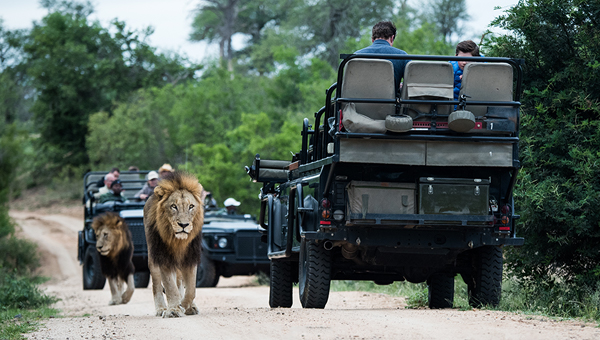
Kruger is South Africa’s best-known safari destination for good reason. Vast, varied and wildlife-rich, it offers a classic bush experience on a grand scale, from river systems and granite koppies to mopane veld and open savanna.
Cape Town is one of the world’s great scenic cities: dramatic, design-forward and endlessly rewarding. Framed by Table Mountain and the Atlantic, it combines natural beauty with serious dining, art, architecture, beaches and easy access to the Winelands.
Phinda is one of South Africa’s most distinctive private reserves because of its extraordinary habitat diversity. Situated in northern KwaZulu-Natal, it combines sand forest, woodland, grassland, wetland and mountain bush, creating a safari that feels dynamic and varied.
Tswalu offers a very different South African safari: vast, refined and deeply focused on rarity. Set in the southern Kalahari, it is less about ticking off the Big Five and more about tracking elusive species, exploring on foot and experiencing the beauty of arid landscapes in privacy.
Kwandwe, in the Eastern Cape, is one of South Africa’s finest private reserves for travellers wanting high-quality safari away from the busier northeastern circuits. Its setting is elegant rather than theatrical — sweeping hills, river valleys and restored wilderness.
The Garden Route is South Africa’s most effortless scenic road journey: a richly varied stretch of coast, forest, lagoon and mountain that works beautifully between Cape Town and the Eastern Cape safari country. It is not a safari destination in the traditional sense, but it is ideal for travellers who want softness, scenery and contrast around their bush time.
click on these icons to learn more about the area.


Plan by region
Click a region below to learn more about the area.

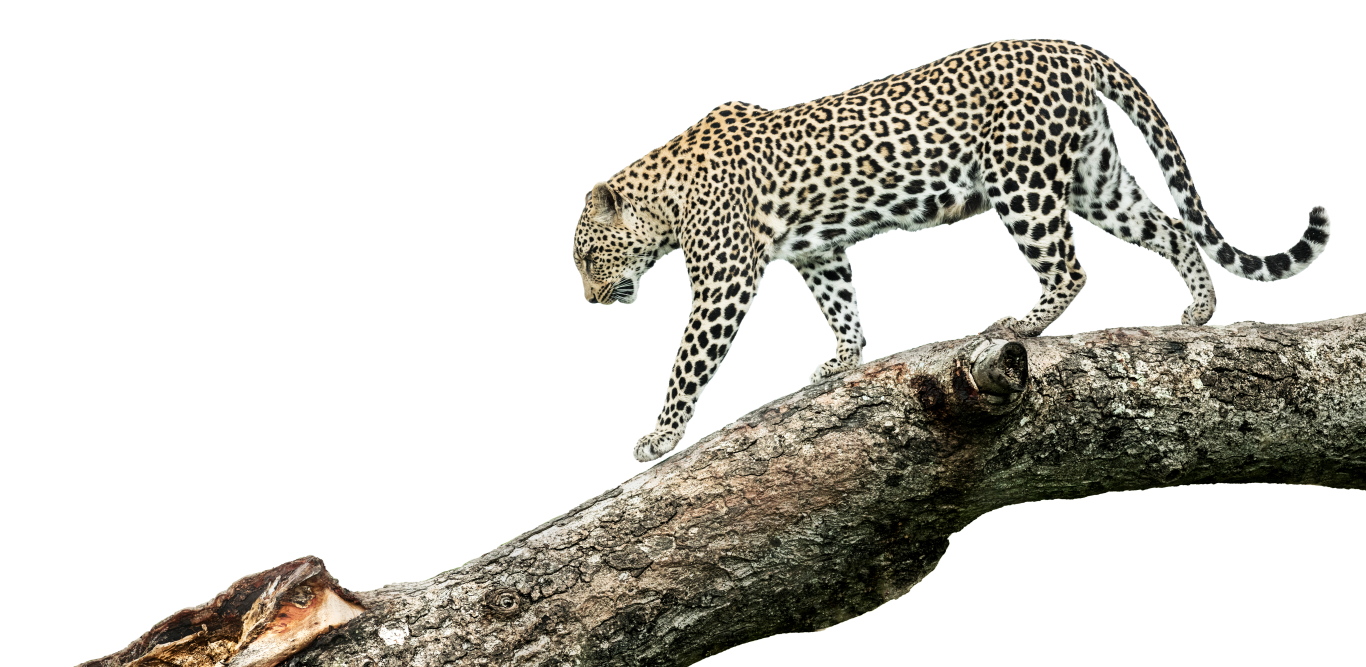
Experience Africa's finest leopard viewing with expert trackers and guides.

Pursue nocturnal species including leopard and civet after dark.

Walk Sabi Sands' bush on foot with expert trackers who read the landscape for you.

Family safaris in Sabi Sands mean experiences desgined around younger children.
Experience Africa's finest leopard viewing with expert trackers and guides.
Pursue nocturnal species including leopard and civet after dark.
Walk Sabi Sands' bush on foot with expert trackers who read the landscape for you.
Family safaris in Sabi Sands mean experiences desgined around younger children.

Cover Kruger's varied ecosystems across nearly two million hectares of bush.

Walk Kruger's bush on foot with an armed guide, moving slowly through grassland where you'll notice the smaller details.

Work the river crossings, kopjes and waterholes for year-round big game images.

Access a wide accommodation range and straightforward logistics for all ages.
Cover Kruger's varied ecosystems across nearly two million hectares of bush.
Walk Kruger's bush on foot with an armed guide, moving slowly through grassland where you'll notice the smaller details.
Work the river crossings, kopjes and waterholes for year-round big game images.
Access a wide accommodation range and straightforward logistics for all ages.

Hike or cable-car above one of the world's great scenic cities.

Eat and drink exceptionally well across Stellenbosch, Franschhoek and beyond.

Sail the Atlantic seaboard with Table Mountain as your backdrop.

Explore one of Africa's most vibrant and design-forward urban cultures.
Visit the Boulders Beach African penguin colony near Simon's Town.
Hike or cable-car above one of the world's great scenic cities.
Eat and drink exceptionally well across Stellenbosch, Franschhoek and beyond.
Sail the Atlantic seaboard with Table Mountain as your backdrop.
Explore one of Africa's most vibrant and design-forward urban cultures.
Visit the Boulders Beach African penguin colony near Simon's Town.

Drive dramatically varied ecosystems including rare sand forest and wetland.

Walk with specialist guides through Phinda's extraordinarily diverse habitats.

Drive after dark through acacia and woodland where spotlights catch nocturnal predators.

Boat the Mkhuze River at dawn when waterbirds are active and crocodile bask on sandbanks.
Drive dramatically varied ecosystems including rare sand forest and wetland.
Walk with specialist guides through Phinda's extraordinarily diverse habitats.
Drive after dark through acacia and woodland where spotlights catch nocturnal predators.
Boat the Mkhuze River at dawn when waterbirds are active and crocodile bask on sandbanks.

Track pangolin, aardvark and aardwolf with specialist Kalahari guides on foot.

Explore the red dune landscape with deeply interpretive field guides.

Ride through open Kalahari terrain among plains game in selected seasons.

Beautifully private lodges with a strong conservation ethos.

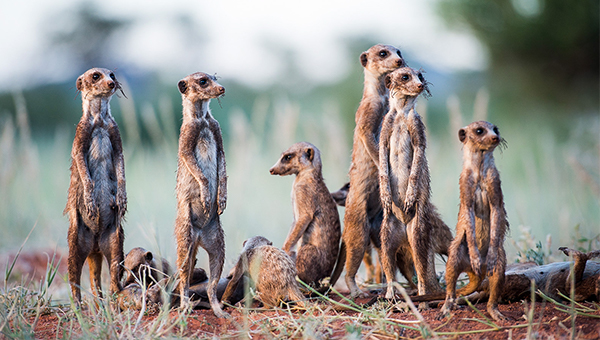
One of the best regions in Southern Africa for close encounters with meerkats.
Track pangolin, aardvark and aardwolf with specialist Kalahari guides on foot.
Explore the red dune landscape with deeply interpretive field guides.
Ride through open Kalahari terrain among plains game in selected seasons.
Beautifully private lodges with a strong conservation ethos.
One of the best regions in Southern Africa for close encounters with meerkats.

Track the Big Five across the Eastern Cape with exclusive vehicle access.

Explore the Great Fish River valley on foot with armed guides.

Join rangers on active black rhino monitoring within the reserve.

Drive after dark through open country where spotlights catch nocturnal predators hunting.

Participate in catch-and-release fishing options suitable for the whole family.
Track the Big Five across the Eastern Cape with exclusive vehicle access.
Explore the Great Fish River valley on foot with armed guides.
Join rangers on active black rhino monitoring within the reserve.
Drive after dark through open country where spotlights catch nocturnal predators hunting.
Participate in catch-and-release fishing options suitable for the whole family.

Walk the cliff path for land-based southern right whale viewing between June and November, and swim in Fick's tidal pool below the village.

Detour over the Outeniqua Pass for ostrich-farm visits, the Cango Caves and Klein Karoo brandy tasting.

Kayak the Touw River into indigenous forest, paddle the lake chain or hike to the Map of Africa viewpoint.

Cruise the lagoon between the Heads, sample local oysters on the waterfront and walk through Featherbed Nature Reserve.

Walk the Robberg Peninsula past Cape fur seal colonies and watch bottlenose dolphin from the cliff paths.

Cross the Storms River suspension bridge, walk a section of the Otter Trail or take the Bloukrans bungee.
Walk the cliff path for land-based southern right whale viewing between June and November, and swim in Fick's tidal pool below the village.
Detour over the Outeniqua Pass for ostrich-farm visits, the Cango Caves and Klein Karoo brandy tasting.
Kayak the Touw River into indigenous forest, paddle the lake chain or hike to the Map of Africa viewpoint.
Cruise the lagoon between the Heads, sample local oysters on the waterfront and walk through Featherbed Nature Reserve.
Walk the Robberg Peninsula past Cape fur seal colonies and watch bottlenose dolphin from the cliff paths.
Cross the Storms River suspension bridge, walk a section of the Otter Trail or take the Bloukrans bungee.
South Africa’s wine regions are among the New World’s most celebrated. They add depth and elegance to safari-led itineraries.
Marine wildlife is a major draw too. Depending on season and coast, travellers can enjoy whale watching, penguins, seals and world-class diving.
South Africa is one of the few destinations where a serious safari and a city-based stay fit naturally into the same trip. Short domestic flights connect Kruger’s airstrips to Cape Town in under three hours. Itineraries that begin in the bush and end on the coast, or the other way around, are now standard.


The Cape Floristic Region is the smallest of the world’s six floral kingdoms but holds around 9,600 plant species, about 70% of which grow nowhere else on earth. The fynbos that defines its mountains and coasts carries more plant species per square kilometre than the Amazon, and the region is a UNESCO-recognised floral hotspot of global significance.


South Africa spreads its capital functions across three cities: Pretoria houses the executive, Cape Town the legislative, and Bloemfontein the judicial. The arrangement dates from the 1910 Union of South Africa as a compromise between the former Boer republics and the British colonies.


Kruger National Park and the unfenced private reserves on its western boundary form one of the largest continuous conservation areas in Africa, covering around two million hectares. The private reserves produce some of the highest leopard densities recorded anywhere in the world.
Before you go
Q: Do I need a visa, and do any children in my party need additional documentation for entry into South Africa?
South Africa is passport-specific on visas: many travelers enter visa-free for tourism, while others must obtain a visa before travel because South Africa generally does not issue visitor visas at the airport. If children are travelling, additional documentation can matter depending on who they are travelling with, especially where parental consent or proof of parentage is relevant. For families, it is worth treating entry paperwork as seriously as the flight tickets.
Q: If I am combining South Africa with other African countries, could yellow fever rules affect my return entry?
Yes – if you leave South Africa and return from a yellow-fever-risk country, the certificate can become essential on re-entry. This matters particularly on wider African itineraries that move between southern Africa and parts of East, Central or West Africa. It is one of the most common reasons that seemingly simple multi-country journeys need proper pre-travel checking.
Q: How much passport validity and how many blank pages should I allow for a multi-stop journey?
South Africa itself asks for passport validity beyond the stay, and regional airlines and border authorities can be exacting about pages and condition. For a multi-stop journey, the comfortable approach is a passport valid well beyond departure and at least three to four blank pages, particularly if there are land borders or regional add-ons. It is far wiser to over-prepare here than to assume one blank page will always be enough.
Q: Should I choose a malaria-free safari area or is a Kruger or Sabi Sands itinerary worth the added health planning?
If you want the easiest possible health planning, malaria-free safari areas are a strong answer, particularly for families with younger children, expectant travellers or anyone keen to avoid prophylaxis. That said, Kruger and Sabi Sands are still worth the extra health planning for guests who want classic big-game density, strong leopard viewing and the fullest traditional safari feel. In practice, many first-time high-end travelers still choose Kruger or Sabi Sands and simply plan the medical side properly.
Q: Is private hospital access straightforward in the regions I am visiting, and what level of insurance is sensible?
Private medical care is one of South Africa’s strengths, especially in major cities and well-served tourism regions. Remote safari areas still rely on stabilization and evacuation before more serious treatment, so robust insurance remains important, but the medical back-up is stronger here than in many safari countries. That helps make South Africa particularly reassuring for multi-generational or longer-stay journeys.
Q: Are there safety or driving considerations I should plan around for independent time in cities and along the coast?
For independent time, good judgment matters more than alarm. Use reputable transfer companies, avoid unnecessary night driving after long flights, keep valuables discreet, and choose accommodation in well-located neighborhoods. Self-driving the Winelands or Garden Route is entirely normal for confident travelers, but urban arrivals and departures are often more elegant with private transfers.
Q: Is it better to pair Cape Town with the Winelands and one safari region, or can I comfortably add the Garden Route or KwaZulu-Natal?
For most guests, Cape Town plus the Winelands and one safari region is the cleanest first South Africa itinerary. You can add the Garden Route or KwaZulu-Natal, but only if the trip is long enough that it still feels relaxed rather than ambitious. South Africa is versatile enough to absorb more, but the most luxurious itineraries usually leave something for a second visit.
Q: Are private reserves such as Sabi Sands, Kwandwe or Phinda a better fit than national parks for the kind of trip I want?
For high-end travelers, private reserves usually outperform national parks on comfort, privacy and guiding. They tend to offer fewer vehicles at sightings, more flexible game-drive timing, stronger service, and in some areas off-road viewing that national parks do not permit. National parks still have their place, especially for breadth and self-drive freedom, but they are rarely the most seamless luxury answer.
Q: How much time should I allow for domestic flights, road transfers and any light-aircraft sectors?
Even in an efficient country, do not underestimate transfer time. A domestic flight plus airport procedures and a safari road transfer will often use half a day door to door, and any light-aircraft sector adds its own baggage and timing constraints. The more polished itineraries are the ones that respect this reality rather than pretending every move is quick.
Q: Which season suits my priorities best: Cape Town summer, whale season, winter safari or shoulder-season value?
Cape Town is at its classic best in summer, whale watching is strongest in the winter-to-spring months, and winter safari is superb for dry-season game viewing. Shoulder seasons can be especially rewarding because they soften pricing and crowds while still delivering excellent experiences. South Africa is really a destination of priorities rather than a single universal best season.
Q: Which regions are strongest for honeymooners, families, food-and-wine travellers or first-time safari-goers?
Cape Town, the Winelands and a refined private safari reserve make an excellent honeymoon pattern. Families often do best in malaria-free reserves or in private reserves that are explicitly geared toward children, while food-and-wine travelers should build in proper time around the Cape. For first-time safari-goers, South Africa is often strongest when the wilderness is balanced with city, coast and culture.
Q: Are villas, exclusive-use lodges or family suites easy to secure in the areas I am considering?
Yes – South Africa has one of the continent’s strongest selections of villas, family suites and exclusive-use lodges. The catch is that the best options, especially over festive dates and peak safari months, are often secured far in advance. For celebrated trips, it is wise to choose the accommodation type first and let that shape the travel dates, not the other way around.