



.jpg)
.jpg)
.jpg)
.jpg)
.jpg)
.jpg)


.jpg)

.jpg)
.jpg)

.jpg)


.jpg)
.jpg)
.jpg)
.jpg)
.jpg)
.jpg)
.jpg)
.jpg)
.jpg)
.jpg)
.jpg)
.jpg)
.jpg)
.jpg)
.jpg)
.jpg)
.jpg)
.jpg)
.jpg)
.jpg)
.jpg)


The Country
Zambia Safari Guide
For high-end travellers, Zambia offers serious substance. South Luangwa remains one of the continent’s best places for traditional safari guiding; the Lower Zambezi blends river beauty with luxury camps and canoe-based adventure; Kafue brings scale and variety; and Victoria Falls gives the country its iconic flourish. Zambia is especially appealing to travellers who want exceptional safari with fewer vehicles, a more understated camp style, and a stronger sense of discovery.
Where to go
Explore Zambia
Lower Zambezi
The Lower Zambezi combines beautiful river scenery with a relaxed but high-calibre safari style. Set along one of Africa’s great rivers, it offers a rare combination of luxury camps, strong game viewing and genuinely varied activities — from canoeing and boating to tiger fishing and bush walks.
South Luangwa National Park
South Luangwa is one of Africa’s great safari regions: rich in wildlife, deeply atmospheric and inseparable from the tradition of guiding on foot. The Luangwa River and its oxbow lagoons shape the park’s identity, drawing game in the dry season and creating ever-changing, beautiful safari scenes.
North Luangwa National Park
North Luangwa is Zambia for purists: remote, lightly developed and best appreciated by travellers who want the romance of a harder-to-reach safari. The emphasis here is on walking, quiet camps and the feeling of being in a place that still resists easy access.
Victoria Falls
Livingstone and the Zambian side of Victoria Falls bring a more adventurous tone to the Falls experience. In lower-water months, travellers can access places and viewpoints that feel much closer to the action, including Livingstone Island and, seasonally, Devil’s Pool.
Kafue
Kafue is vast, varied and still surprisingly under the radar. Its scale is one of its greatest strengths: the park includes river systems, miombo woodland, broad floodplains and remote bush that can feel almost untouched by tourism.
Map Key
AREAS WE RECOMMEND
click on these icons to learn more about the area.
Points of Interest
LAKES / WATER ZONES


Plan by region
Zambia REGIONS
Click a region below to learn more about the area.
- OVERVIEW
- HABITATS
- WILDLIFE
- ACTIVITIES
- WEATHER
01
overview
Lower Zambezi National Park
Reasons to Visit
- Accessibility to Vic Falls
- Canoe Safaris
- Big Game Encounters
HABITATS
Lower Zambezi National Park
WILDLIFE
Lower Zambezi National Park
Elephant
Buffalo
Lion
Leopard
Hippo
African Wild Dog
ACTIVITIES
Lower Zambezi National Park

Cover the floodplain, escarpment and inland savanna for predator and game.

Paddle the Zambezi between islands past elephant, hippo and crocodile.

Fish for tigerfish on the Zambezi with specialist guides and tackle.

Watch shoreline game from open motorboats along the Zambezi riverfront.

Walk the floodplain edge with armed rangers and specialist guides.
WEATHER
Lower Zambezi National Park
A MONTH BY MONTH BREAKDOWN OF THE WEATHER
01
overview
Lower Zambezi National Park
Reasons to Visit
- Accessibility to Vic Falls
- Canoe Safaris
- Big Game Encounters
HABITATS
Lower Zambezi National Park
WILDLIFE
Lower Zambezi National Park
Elephant
Buffalo
Lion
Leopard
Hippo
African Wild Dog
ACTIVITIES
Lower Zambezi National Park
Cover the floodplain, escarpment and inland savanna for predator and game.
Paddle the Zambezi between islands past elephant, hippo and crocodile.
Fish for tigerfish on the Zambezi with specialist guides and tackle.
Watch shoreline game from open motorboats along the Zambezi riverfront.
Walk the floodplain edge with armed rangers and specialist guides.
WEATHER
Lower Zambezi National Park
A MONTH BY MONTH BREAKDOWN OF THE WEATHER
- OVERVIEW
- HABITATS
- WILDLIFE
- ACTIVITIES
- WEATHER
01
overview
South Luangwa National Park
Reasons to Visit
- Birthplace of the Walking Safari
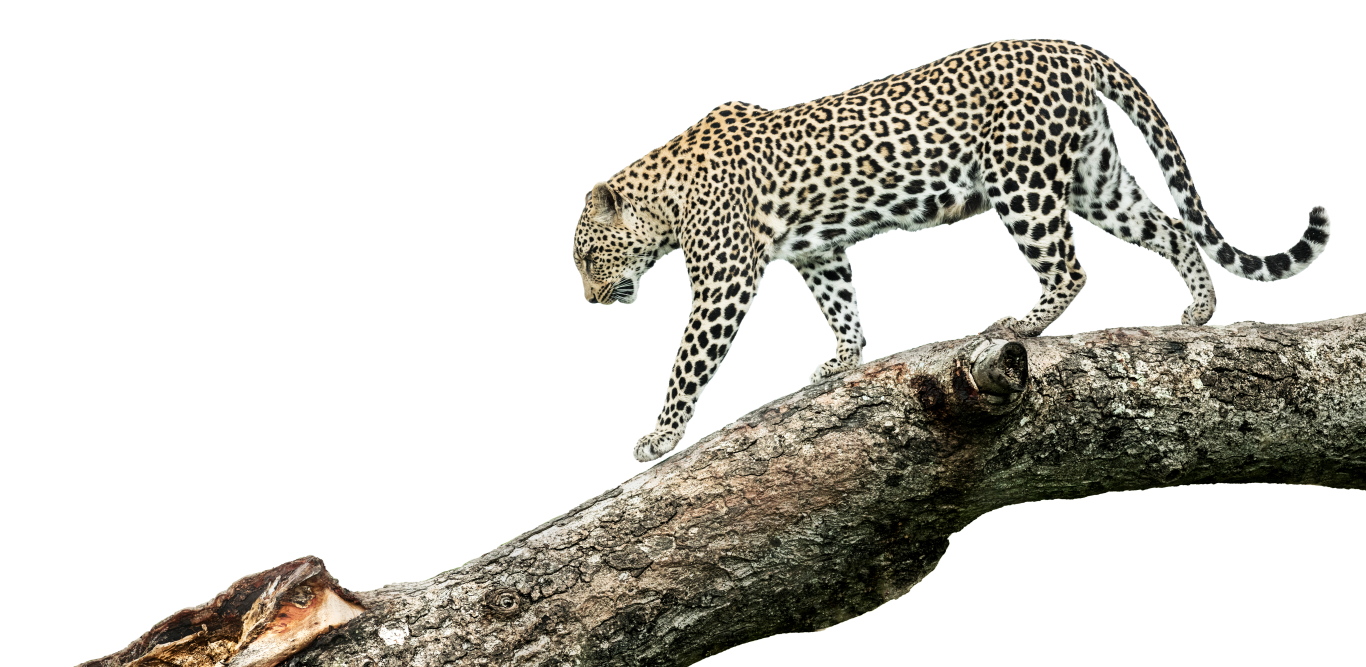
- The Valley of the Leopard
- Endemic Wildlife Subspecies
HABITATS
South Luangwa National Park
WILDLIFE
South Luangwa National Park
Leopard
Lion
Elephant
Buffalo
Puku
Thornicroft's Giraffe
ACTIVITIES
South Luangwa National Park

Watch hippo, crocodile and predators concentrate around shrinking oxbow lagoons.

Walk legendary Luangwa trails with some of Africa's finest bush guides.

South Luangwa's star beds let you fall asleep to the sound of hippos in the Luangwa River.

Work the lagoons, river crossings and leopard sightings in exceptional dry-season light.

A hide is where you sit completely still and watch animals come to the waterhole as if you're not there at all.
WEATHER
South Luangwa National Park
A MONTH BY MONTH BREAKDOWN OF THE WEATHER
01
overview
South Luangwa National Park
Reasons to Visit
- Birthplace of the Walking Safari
- The Valley of the Leopard
- Endemic Wildlife Subspecies
HABITATS
South Luangwa National Park
WILDLIFE
South Luangwa National Park
Leopard
Lion
Elephant
Buffalo
Puku
Thornicroft's Giraffe
ACTIVITIES
South Luangwa National Park
Watch hippo, crocodile and predators concentrate around shrinking oxbow lagoons.
Walk legendary Luangwa trails with some of Africa's finest bush guides.
South Luangwa's star beds let you fall asleep to the sound of hippos in the Luangwa River.
Work the lagoons, river crossings and leopard sightings in exceptional dry-season light.
A hide is where you sit completely still and watch animals come to the waterhole as if you're not there at all.
WEATHER
South Luangwa National Park
A MONTH BY MONTH BREAKDOWN OF THE WEATHER
- OVERVIEW
- HABITATS
- WILDLIFE
- ACTIVITIES
- WEATHER
01
overview
Victoria Falls
Reasons to Visit
- Adventure at the Falls
- Up-Close Victoria Falls Experience
- Gateway to three countries
HABITATS
Victoria Falls
WILDLIFE
Victoria Falls
Hippo
Nile Crocodile
Elephant
White Rhino
ACTIVITIES
Victoria Falls

Stand at the edge of the world's largest curtain of falling water.

Swim at the lip of Victoria Falls when seasonal water levels permit.

Fly over the full 1,708-metre width of the Falls from above.

Drift upstream on the Zambezi as the light turns the water gold.

Tackle Grade 5 rapids through the basalt gorges below the Falls.
WEATHER
Victoria Falls
A MONTH BY MONTH BREAKDOWN OF THE WEATHER
01
overview
Victoria Falls
Reasons to Visit
- Adventure at the Falls
- Up-Close Victoria Falls Experience
- Gateway to three countries
HABITATS
Victoria Falls
WILDLIFE
Victoria Falls
Hippo
Nile Crocodile
Elephant
White Rhino
ACTIVITIES
Victoria Falls
Stand at the edge of the world's largest curtain of falling water.
Swim at the lip of Victoria Falls when seasonal water levels permit.
Fly over the full 1,708-metre width of the Falls from above.
Drift upstream on the Zambezi as the light turns the water gold.
Tackle Grade 5 rapids through the basalt gorges below the Falls.
WEATHER
Victoria Falls
A MONTH BY MONTH BREAKDOWN OF THE WEATHER
- OVERVIEW
- HABITATS
- WILDLIFE
- ACTIVITIES
- WEATHER
01
overview
Kafue
Reasons to Visit
- Africa's second-largest park
- Predator stronghold
- Fishing and Walking Safaris
HABITATS
Kafue
WILDLIFE
Kafue
Lion
Leopard
Cheetah
Sable Antelope
Roan Antelope
Lichtenstein's Hartebeest
ACTIVITIES
Kafue

Cover vast, private terrain across one of Africa's largest national parks.

Explore the Kafue River and its tributaries from the water.

Walk through miombo woodland and floodplain edges with armed guides.

Seek lion and cheetah on Zambia's most dramatic open floodplain terrain.
WEATHER
Kafue
A MONTH BY MONTH BREAKDOWN OF THE WEATHER
01
overview
Kafue
Reasons to Visit
- Africa's second-largest park
- Predator stronghold
- Fishing and Walking Safaris
HABITATS
Kafue
WILDLIFE
Kafue
Lion
Leopard
Cheetah
Sable Antelope
Roan Antelope
Lichtenstein's Hartebeest
ACTIVITIES
Kafue
Cover vast, private terrain across one of Africa's largest national parks.
Explore the Kafue River and its tributaries from the water.
Walk through miombo woodland and floodplain edges with armed guides.
Seek lion and cheetah on Zambia's most dramatic open floodplain terrain.
WEATHER
Kafue
A MONTH BY MONTH BREAKDOWN OF THE WEATHER
- OVERVIEW
- HABITATS
- WILDLIFE
- ACTIVITIES
- WEATHER
01
overview
North Luangwa National Park
Reasons to Visit
- Walking safari Specialisation
- Zambia for Purists
- Pristine Remoteness
HABITATS
North Luangwa National Park
WILDLIFE
North Luangwa National Park
Elephant
Buffalo
Lion
Leopard
African Wild Dog
Cookson's Wildebeest
ACTIVITIES
North Luangwa National Park

Track leopard and lion through North Luangwa's remote floodplain.

Trek remote wilderness with very few other visitors across true frontier terrain.

End the day with sundowners overlooking the river and floodplains.
WEATHER
North Luangwa National Park
A MONTH BY MONTH BREAKDOWN OF THE WEATHER
01
overview
North Luangwa National Park
Reasons to Visit
- Walking safari Specialisation
- Zambia for Purists
- Pristine Remoteness
HABITATS
North Luangwa National Park
WILDLIFE
North Luangwa National Park
Elephant
Buffalo
Lion
Leopard
African Wild Dog
Cookson's Wildebeest
ACTIVITIES
North Luangwa National Park
Track leopard and lion through North Luangwa's remote floodplain.
Trek remote wilderness with very few other visitors across true frontier terrain.
End the day with sundowners overlooking the river and floodplains.
WEATHER
North Luangwa National Park
A MONTH BY MONTH BREAKDOWN OF THE WEATHER
KEY FACTS FOR Zambia
Kafue is one of the largest national parks in Africa. Its scale allows for striking habitat diversity and very different safari sub-regions.
Kasanka hosts one of the world’s great bat spectacles. The annual fruit-bat migration is extraordinary.
Population Size
Approx. 21 million
Geographic Size
Approx. 752,618 sq km
Capital
Lusaka
Currency
Zambian Kwacha (ZMW)
Offical Language
English
Best time to visit
June to October for classic safari; November to March for emerald-green landscapes in selected areas; the Falls are most powerful roughly March to May
01
The modern walking safari was invented in Zambia.
Norman Carr pioneered guided walking in South Luangwa in the 1950s, and the park remains the spiritual home of the practice. Walking changes how you read the bush, from spoor and tracks to the smaller details game vehicles tend to miss.


02
Kasanka hosts one of the largest mammal migrations on Earth.
Between October and December, around ten million straw-coloured fruit bats descend on a small patch of swamp forest to feed on the seasonal fruit. It is one of the densest concentrations of mammals on the planet, and almost no one sees it.


03
The Zambian side of Victoria Falls offers a closer, wetter perspective.
In high water from March to May, the spray makes the viewpoints almost impossible to see through. From August onwards, lower flow reveals the geology of the gorge and opens up Devil’s Pool, where you can swim to the very lip.


04
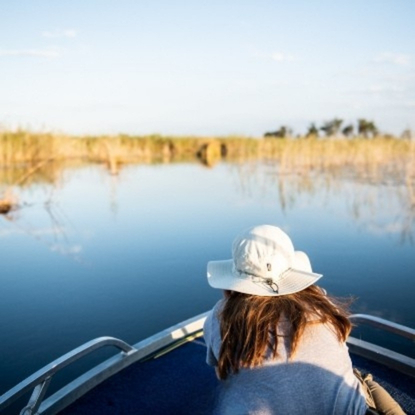
The Lower Zambezi is one of Africa's great canoe safaris.
Drifting downstream past pods of hippo and herds of elephant on the banks creates a rhythm completely different from a game drive. The river also draws huge numbers of carmine bee-eaters, who nest in the vertical sandbanks from September.
Before you go
Zambia FAQ's
Do I need a visa for Zambia?
Zambia’s entry rules vary by passport, with some travelers visa-free, some eligible on arrival and others better handled in advance. If you are combining Zambia with Zimbabwe around Victoria Falls, the KAZA Univisa is often the smartest tool because it can simplify repeated border crossings without making the trip feel administrative. For a luxury journey, the right answer is almost always to confirm the visa strategy before ticketing rather than at the airport.
Do I need a yellow fever certificate for Zambia?
Yellow fever proof is route-dependent rather than universally required. If you are arriving from a yellow-fever-risk country, or have transited in a way that triggers the rule, then yes, you should expect to show the certificate. On wider African itineraries it is prudent to travel with it whenever relevant rather than trying to predict whether the border officer will ask.
Are there park fees or additional costs I need to know about in Zambia?
Most well-structured itineraries include the major park fees and internal safari taxes, but there can still be items to clarify in advance. Visas, border charges, conservation levies, some tourism taxes and the occasional local payment or tipping requirement can sit outside the room rate. The best practice is to ask for a line-by-line inclusions schedule before final payment.
Is Zambia malaria-free?
For South Luangwa, Lower Zambezi and Kafue, malaria planning is usually standard rather than exceptional. The answer can still vary with season, age and medical history, but most travelers should expect to discuss prophylaxis with a travel doctor. Zambia is one of the classic safari countries where mosquito protection is taken seriously, not casually.
What travel insurance do I need for a trip to Zambia?
Zambian camps are remote in the truest sense. They usually have capable staff, first-aid procedures and evacuation protocols, but are not located nearby hospital infrastructure. Serious issues normally rely on air evacuation and onward treatment in larger centers, so comprehensive emergency cover is essential for any guest who wants to travel with confidence.
Can anyone participate in walking safaris in Zambia?
Walking and canoeing are among Zambia’s great strengths, but they are not automatically right for every party. Age limits, balance, stamina, heat tolerance and comfort around wildlife all matter, and some camps are far better than others for multi-generational groups. If even one guest wants a gentler rhythm, choose a camp where game drives remain the core experience and optional adventure is truly optional.
Where should I go on my first trip to Zambia?
A first Zambia trip can work beautifully either way, but the luxury balance is usually a two-park combination rather than just one camp or a rushed grand circuit. One park in depth suits guests who care more about immersion than variety; two parks suits first-time visitors who want contrast without sacrificing quality. Once you try to do too much, Zambia loses the spaciousness that makes it special.
For a first trip, South Luangwa and Lower Zambezi are one of the most elegant pairings because they offer different landscapes without losing the sense of one cohesive safari. Kafue is superb but rewards extra time; if you add it to a shorter trip, the routing can become more complicated than it needs to be. Livingstone and the Falls fit best as a clean beginning or ending rather than squeezed into the middle.
How do I get between camps in Zambia?
Typically a mix of scheduled light-aircraft services with selected road transfers. Private charters can be transformative where time is short or privacy matters, but they are not always necessary to create a beautiful trip. The real planning question is which sectors deserve the extra ease and which can comfortably be handled by road or scheduled air.
How long should I stay in Livingstone to experience Victoria Falls?
Two nights is the minimum that makes Livingstone worthwhile if you want more than a rushed Falls photo stop. Three nights is better if you want to combine the Falls with a river cruise, helicopter flight, private guiding, spa time or an easy day at the lodge. It is one of those places that rewards a little breathing room.
When is the best time to visit Zambia?
The answer depends on what you most want Zambia to be. Earlier and cooler dry months are excellent for walking, later dry months are strongest for concentrated game viewing, and water levels shape how dramatic Victoria Falls feels and whether activities such as Devil’s Pool are available. Zambia is best when you choose one headline priority and let the month follow that choice.
Are camps open year-round in Zambia?
Many camps in the more flood-prone parks close during the rains, and reopening dates vary between regions and even between individual properties. South Luangwa and Lower Zambezi tend to have the clearest dry-season windows, while Kafue is more varied depending on the sector. In Zambia, ‘open season’ is a camp-by-camp conversation rather than a single countrywide rule.