Our blog is where we share what we’re learning, what we’re noticing, and what’s worth knowing before you go. Field notes, destination guides, seasonal updates.

Follow Us
EXPLORE

Every great safari begins with a single conversation. Whenever you’re ready, we’re here.

See Africa the way we see it, through the eyes of people who never stopped looking.

We only work in wild places we’re committed to protecting. Here’s what that looks like in practice.

Honest answers to the questions worth asking before you go.

Sossusvlei

01

overview

Sossusvlei

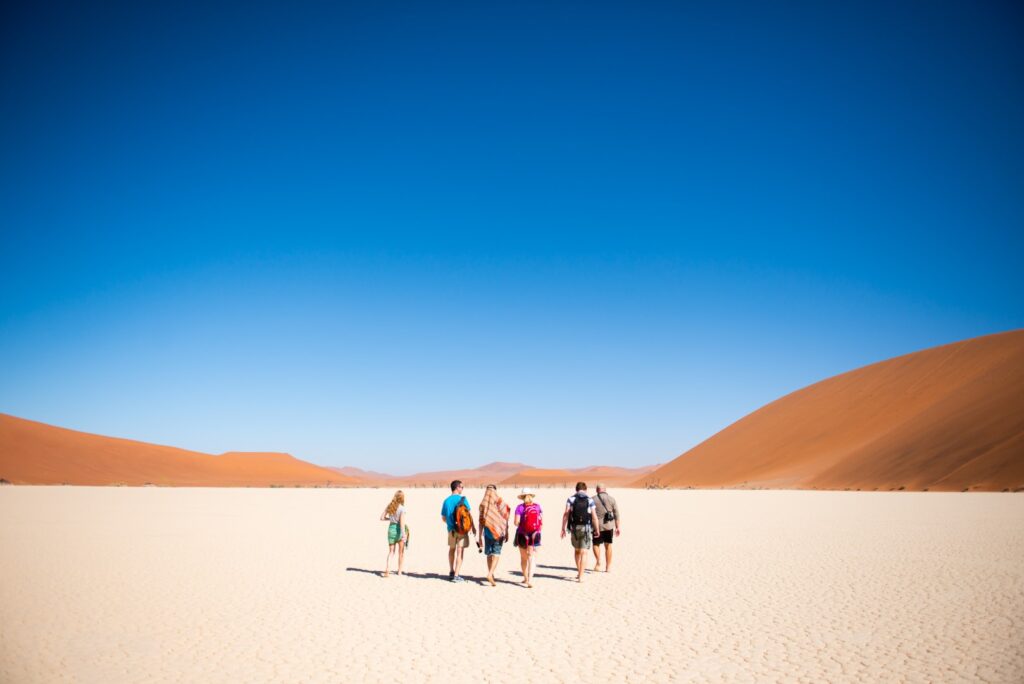
Sossusvlei is Namibia’s most iconic landscape: a surreal world of towering red dunes, bleached pans and dead camelthorn trees set against an intensely blue sky. It is a destination of light and form, best experienced early and late in the day when shadows carve the dunes into perfect lines. Beyond the obvious beauty, this is also a place of stillness and scale, ideal for travellers who want both spectacle and serenity.
Reasons to Visit
The dunes of the Namib-Naukluft Park include the tallest on earth. The great star dunes around Sossusvlei rise to more than 300 metres above the valley floor, their form shifting continuously with the wind while their position remains essentially unchanged. Their colour moves through the day from pale apricot at first light to deep burnt ochre in the afternoon, and the shadows they cast at sunrise and sunset are among the most photographed landscapes on the continent.
Deadvlei is a white clay pan ringed by some of the highest dunes in the park, its floor scattered with the blackened skeletons of camel thorn acacia trees that died around 900 years ago when the nearby river changed course and cut off their water supply. The trees are too desiccated to decompose in the desert air, so they remain as they stood in their final years — preserved by the climate in a landscape that seems to have stopped at a particular moment and simply never resumed.
The Namib is estimated to be between 55 and 80 million years old, making it the oldest desert on earth by a considerable margin. That age has produced an ecosystem of remarkable specificity: the welwitschia plant, which can live for more than a thousand years on fog alone; beetles that harvest moisture from the morning mist by standing on dune crests with their bodies angled into the breeze; and endemic species found nowhere else. The landscape here is not merely dramatic — it is ancient in a way that very few places on earth can genuinely claim.
01

overview

Sossusvlei

Sossusvlei is Namibia’s most iconic landscape: a surreal world of towering red dunes, bleached pans and dead camelthorn trees set against an intensely blue sky. It is a destination of light and form, best experienced early and late in the day when shadows carve the dunes into perfect lines. Beyond the obvious beauty, this is also a place of stillness and scale, ideal for travellers who want both spectacle and serenity.
Reasons to Visit
The dunes of the Namib-Naukluft Park include the tallest on earth. The great star dunes around Sossusvlei rise to more than 300 metres above the valley floor, their form shifting continuously with the wind while their position remains essentially unchanged. Their colour moves through the day from pale apricot at first light to deep burnt ochre in the afternoon, and the shadows they cast at sunrise and sunset are among the most photographed landscapes on the continent.
Deadvlei is a white clay pan ringed by some of the highest dunes in the park, its floor scattered with the blackened skeletons of camel thorn acacia trees that died around 900 years ago when the nearby river changed course and cut off their water supply. The trees are too desiccated to decompose in the desert air, so they remain as they stood in their final years — preserved by the climate in a landscape that seems to have stopped at a particular moment and simply never resumed.
The Namib is estimated to be between 55 and 80 million years old, making it the oldest desert on earth by a considerable margin. That age has produced an ecosystem of remarkable specificity: the welwitschia plant, which can live for more than a thousand years on fog alone; beetles that harvest moisture from the morning mist by standing on dune crests with their bodies angled into the breeze; and endemic species found nowhere else. The landscape here is not merely dramatic — it is ancient in a way that very few places on earth can genuinely claim.

Thank you

You’re in good hands.

We’ve received your enquiry, and someone from our team will be reviewing it shortly. You’ll hear from us soon.

BE INSPIRED BY YOUR CURIOSITY