



.jpg)
.jpg)
.jpg)
.jpg)
.jpg)
.jpg)


.jpg)

.jpg)
.jpg)

.jpg)


.jpg)
.jpg)
.jpg)
.jpg)
.jpg)
.jpg)
.jpg)
.jpg)
.jpg)
.jpg)
.jpg)
.jpg)
.jpg)
.jpg)
.jpg)
.jpg)
.jpg)
.jpg)
.jpg)
.jpg)
.jpg)

On the morning of Friday 4 September, the road from Musanze to Kinigi will fill with people walking uphill towards the volcanoes. Dancers from the villages that border the forest, trackers who have spent twenty years following the same gorilla families, vets, rangers, schoolchildren, and a few thousand guests will gather in an amphitheatre at the foot of Mount Sabyinyo. Then, one by one, twenty-two infant mountain gorillas born in the past year will be given a name.
None of the gorillas are present. They are somewhere above the treeline in the bamboo and hagenia forest, doing what gorillas do. That is rather the point.
What is Kwita Izina?
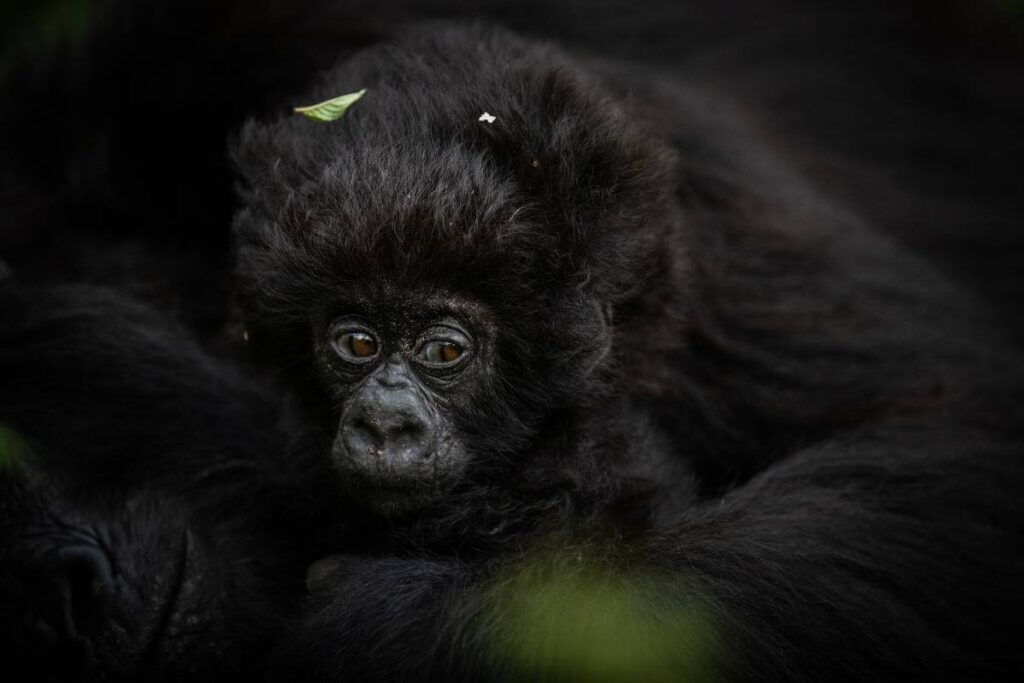
Kwita Izina is Rwanda’s annual gorilla naming ceremony, held each year at Kinigi on the edge of Volcanoes National Park. It takes its name and its form from a Rwandan tradition that predates the country’s tourism industry by centuries: when a child is born, family and neighbours gather to give the baby a name, and in doing so accept a shared responsibility for that child’s life.
In 2005, Rwanda applied that custom to mountain gorillas. A gorilla with a name is a gorilla someone is accountable for. Since that first ceremony, 438 mountain gorillas have been named.
When is Kwita Izina 2026 and how many baby gorillas will be named?
The 21st Kwita Izina takes place on Friday 4 September 2026 in Kinigi, Musanze District, under the theme “Conservation is Life: Sustaining the Future.” Twenty-two infants will be named, each by an invited namer drawn from conservation, science, sport, the arts and the communities living alongside the park.
Stay informed and visit the official Kwita Izina website to find out exactly what they named each 2026 baby.
Where the names come from, and why they matter
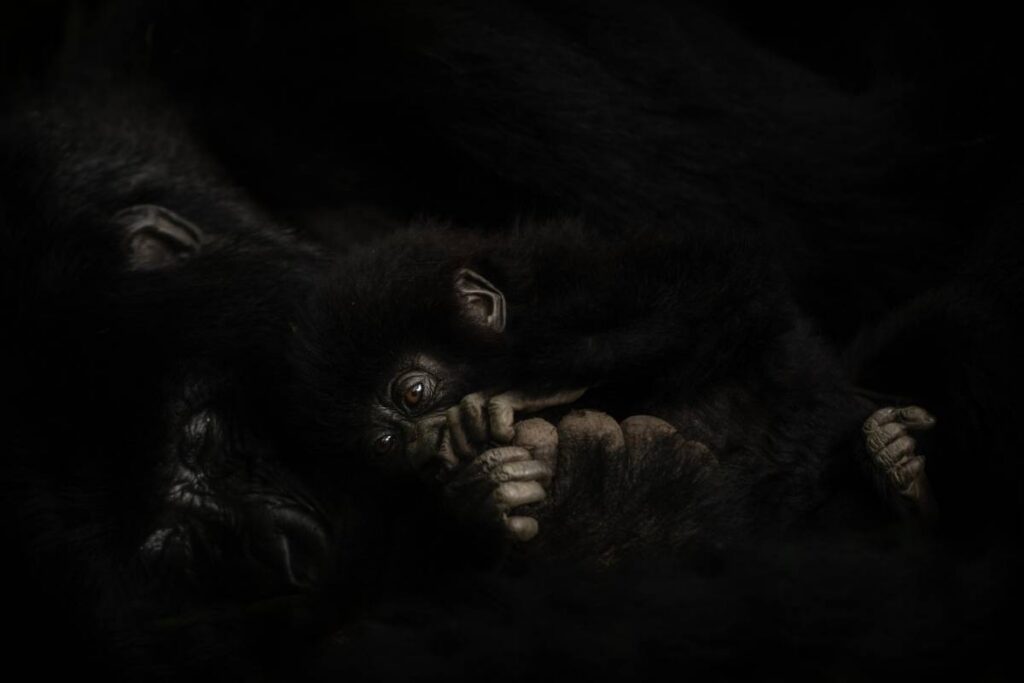
The names are chosen in Kinyarwanda, and have specific meaning. They record something true about the infant or the circumstances of its birth: the group it was born into, the weather that week, a quality the trackers have already noticed, a hope for what the animal will become. Umuryango, meaning family, was given to an infant born into a group that researchers have monitored continuously for more than twenty-five years. Read a list of the names, and you are reading a set of field notes.
However, before the ceremony, when Dian Fossey established the Karisoke Research Centre in the Virungas in 1967, she began naming individual gorillas so she could tell them apart and track them over time. Digit, Uncle Bert, Effie, Beethoven. Long before Kwita Izina existed, rangers and researchers were naming infants informally because a name is the most practical filing system there is for an animal you intend to follow for forty years.
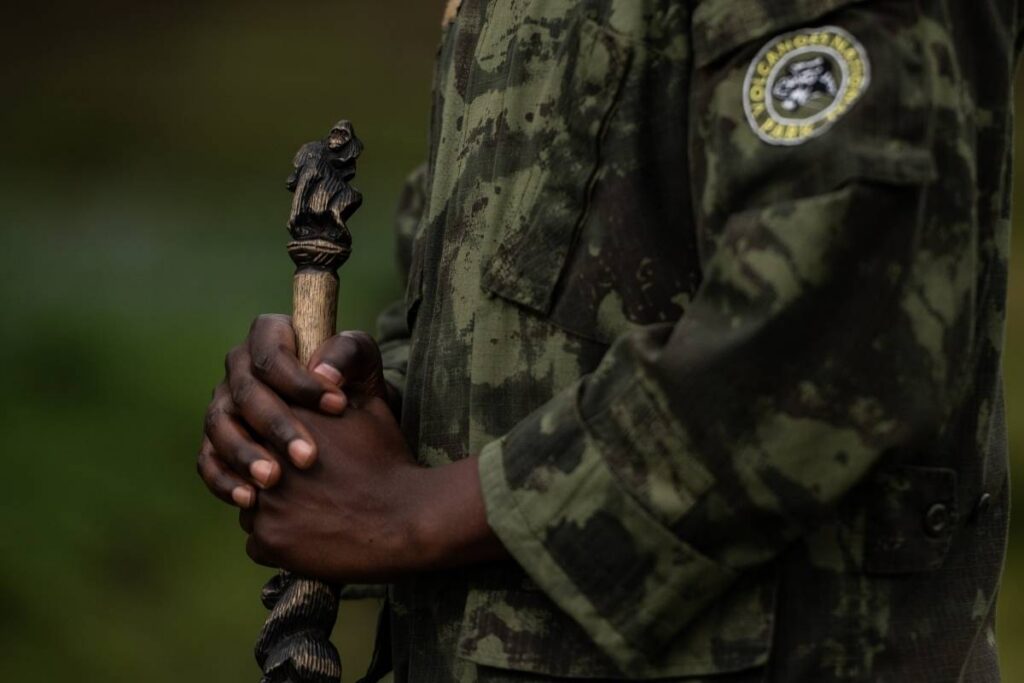
The ceremony itself ultimately celebrates the daily interactions with these gorillas. Every habituated gorilla family in Volcanoes National Park is visited by trackers every single day of the year, whether tourists are trekking or not. The trackers know which silverback is losing patience with which blackback, which female is pregnant, which infant has a cough. When something goes wrong, a veterinary team from Gorilla Doctors can intervene in the field within hours. Snare removal, respiratory infections, injuries from territorial fights: these are treated in the forest, on named individuals, by people who know them. The name is the beginning of that chain.
Can travellers attend the Kwita Izina ceremony?
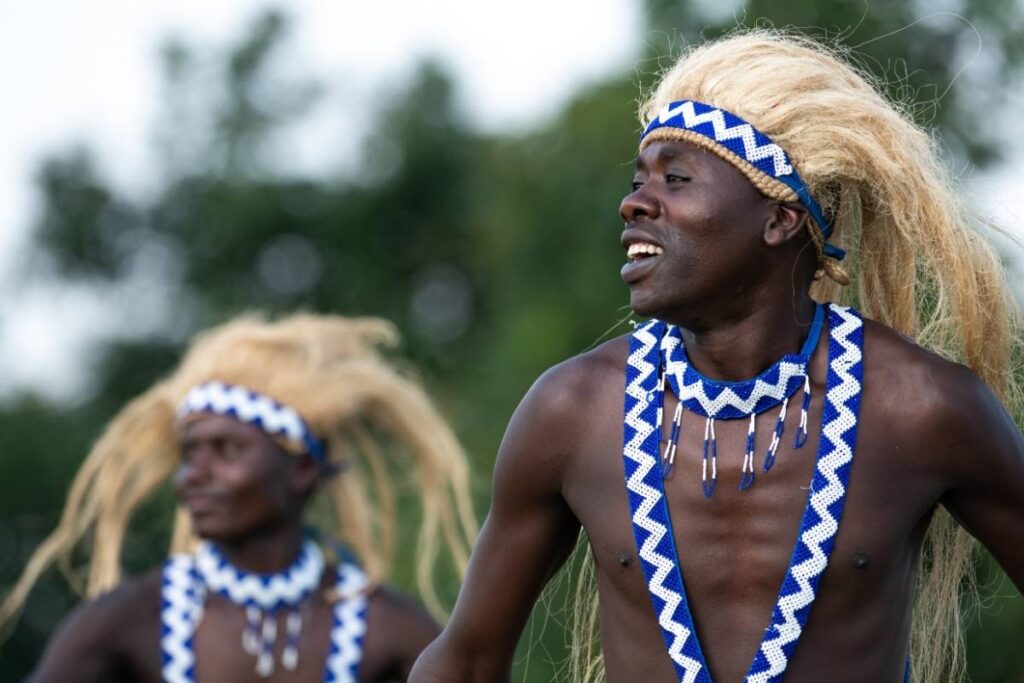
Yes, and it is worth understanding what you are attending. Kwita Izina is a national event rather than a tourist attraction. The audience is overwhelmingly Rwandan; the programme is built around the communities and trackers rather than visitors. There is traditional dance, speeches from government and conservation officials, and a formal naming procession. Each infant’s namer is called up to stand beside the tracker who first found it and reported its birth, and that handover is the one moment in the day aimed squarely at the animal rather than the audience.
Attendance at Kinigi is arranged through the Rwanda Development Board, and places are finite. If you would like to be there, you should ask early. The ceremony also sits inside a wider week of conservation events in Kigali and Musanze, including the annual conservation conference that brings together scientists, park authorities from across the Virunga range and the private sector, and community celebrations in the villages around the park.
One practical note that catches people out: gorilla permits are in exceptionally short supply during Kwita Izina week, because the country is full of people who have come for exactly that reason. Attending the ceremony and trekking in the same trip needs planning months ahead, not weeks. Where Rwandan permits are gone, we look across the range to Bwindi Impenetrable Forest and Mgahinga in Uganda, or to the western lowland gorillas of Odzala in the Republic of Congo, which is a different animal in a different forest and worth understanding on its own terms.
Gorilla trekking in Volcanoes National Park: permits, cost and process
A gorilla permit in Rwanda costs USD 1,500 per person for international visitors, with reduced rates of USD 500 for African citizens and foreign residents in Africa, and USD 200 for East African citizens. The permit covers one trek, one hour with the gorillas, and the guides, trackers and armed escort who take you up.
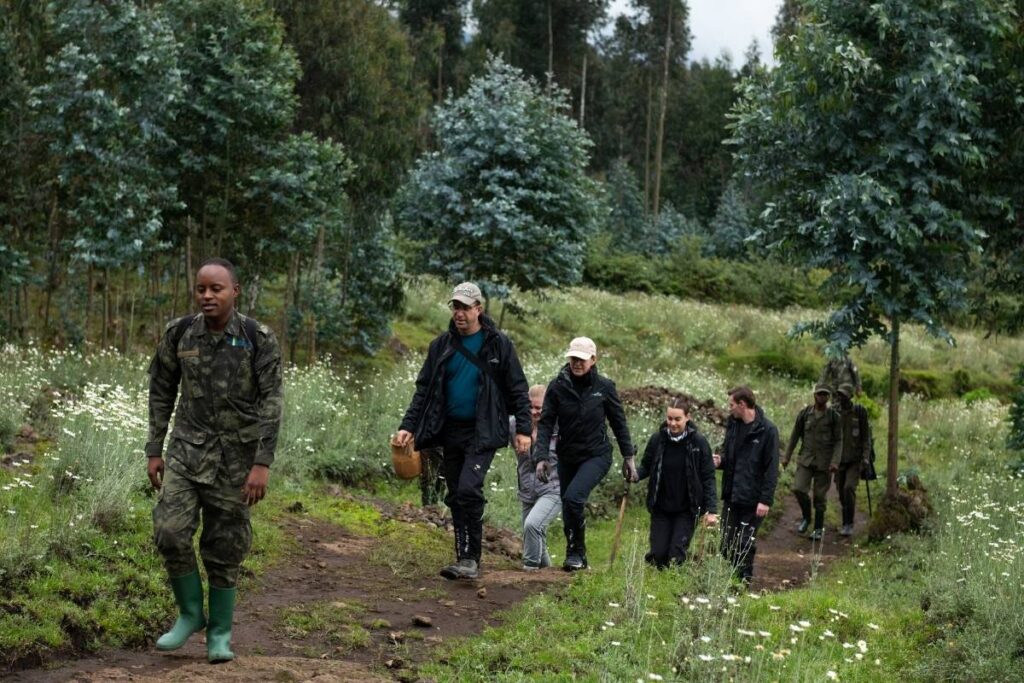
Twelve habituated families are available to visitors, each receiving a maximum of eight people per day, which caps the entire park at 96 permits daily. That number is the single most important fact about gorilla trekking in Rwanda. It is why permits sell out, why prices are what they are, and why an hour in the forest feels nothing like a game drive.
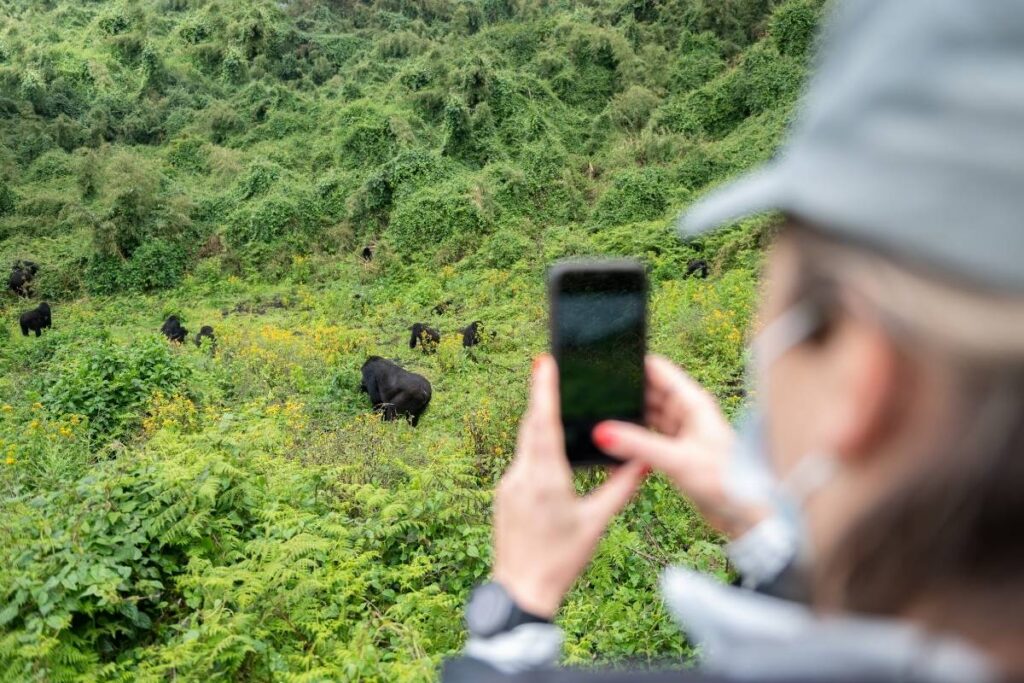
Everyone gathers at the park headquarters in Kinigi at 7am for briefing, where families are allocated according to fitness, altitude and how far the group has moved overnight. Treks range from about forty minutes to a full day of steep, wet, nettle-heavy walking at altitudes between 2,500 and 3,000 metres. Minimum age is fifteen. Visitors keep seven metres back, wear a mask, and anyone with a cold is asked to stay behind, because gorillas share enough of our biology to catch our respiratory infections and have no immunity to them.
Then a tracker parts a curtain of vegetation and there is a silverback lying six metres away, and the hour goes very quickly.
When is the best time to go gorilla trekking in Rwanda?
Rwanda has two dry seasons: the long one from June to September, and a shorter one from mid-December to February. These are the easier months to trek. The trails hold together, the descent is less treacherous, and photography in the forest is more forgiving.
That said, this is Afromontane rainforest at altitude and it rains in every month of the year. The wet seasons, from March to May and again from October to November, bring softer light, thicker vegetation, fewer people on the mountain and gorilla families that often feed at lower elevations, which can mean a shorter walk. September, when Kwita Izina falls, is dry, green and busy, and pairs naturally with the tail end of the Serengeti and Masai Mara river crossing season if you are building a longer East African itinerary. Our guide to East African seasonality and the Great Migration sets out how those months line up.
Where to stay near Volcanoes National Park
The lodges sit in a narrow band along the park boundary around Kinigi, and the practical difference between them is how long you spend in a vehicle before a 7am briefing.
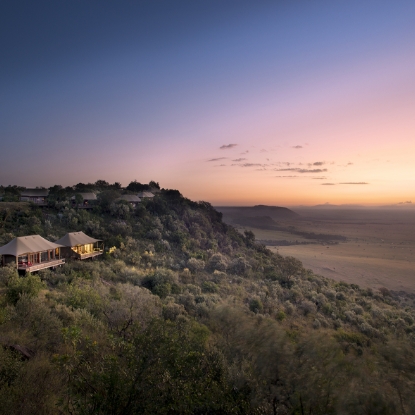
Singita Kwitonda Lodge stands directly on the park edge with the volcanoes filling the windows, and runs a nursery that has propagated hundreds of thousands of indigenous trees for the surrounding buffer. One&Only Gorilla’s Nest sits within a eucalyptus forest a short drive from the park gate. Wilderness Bisate is built into the eroded cone of an extinct volcano, and its reforestation programme has put well over a hundred thousand indigenous trees back into the landscape. Virunga Lodge takes the longer view, literally, from a ridge above lakes Burera and Ruhondo, trading proximity for one of the finest outlooks in the country. Sabyinyo Silverback Lodge is owned by the community trust that represents the villages around the park, so a stay there routes revenue straight back into the same mechanism the ceremony celebrates. If that side of things matters to you, our piece on sustainable safari lodges in Africa looks at how a handful of camps across the continent are structured.
We match the lodge to the trek rather than the other way around, and we are candid about which ones suit which pace.
The names are the record
What makes Kwita Izina land is not the ceremony itself but what it implies. Twenty-two names read out in a field in Kinigi means twenty-two infants that survived their first year, in a forest that has been counted, walked, defended and paid for by the people who live at its edge. It means 460 gorillas named since 2005, each one entered into a record that will follow it for the rest of its life.
If you would like to see the Virungas for yourself, whether during Kwita Izina week or in the quieter months on either side, talk to us and we will build it around the permits we can actually secure. Timing, altitude, fitness and the right lodge all need lining up well in advance, and the earlier we start, the better the trip we can put together.